
For a few years, running Google Ads felt like handing your keys to a valet who won't say where the car is parked. Performance Max was a black box. Bidding was a black box. "Trust the algorithm" was the whole strategy.
2026 changed the tone. Google spent the year shipping AI features and, quietly, the controls to steer them. Some are live, some are in beta, one is still on the way. Here are the six I'd actually pay attention to, when I'd use each one, when I wouldn't, and how the play changes if you sell to businesses versus people.

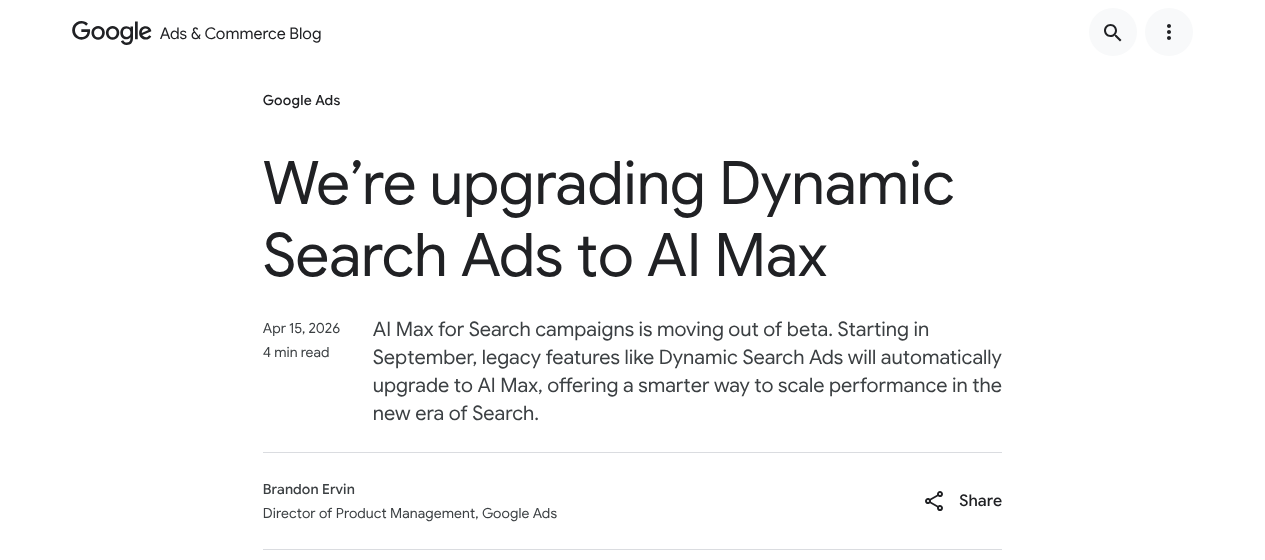
What it is: Google's successor to Dynamic Search Ads. It matches your ads to searches beyond your keyword list, tailors ad text from your site and can send people to a better landing page. It left beta in April. Campaigns using automatically created assets or campaign-level broad match were set to auto-upgrade starting in September, and Dynamic Search Ads follow starting February 2027.
Use it when: your website explains what you do better than your keyword list does.
Skip it when: your site is thin, your conversion tracking is shaky or legal has to approve every word.
B2B: An IT services firm bidding on "managed IT services" never sees the person searching "server keeps crashing after updates." AI Max can. Use brand controls, keep it off the careers page with URL controls and write text guidelines so it never promises 24/7 support you don't offer.
B2C: A home goods store gets long-tail product questions nobody would think to put in a keyword list. Text customization answers the question. You write the guardrails.
Google says the full feature set drives an average of 7% more conversions or conversion value at a similar CPA or ROAS than search term matching alone. That's Google grading its own homework, so prove it with an experiment in your account.
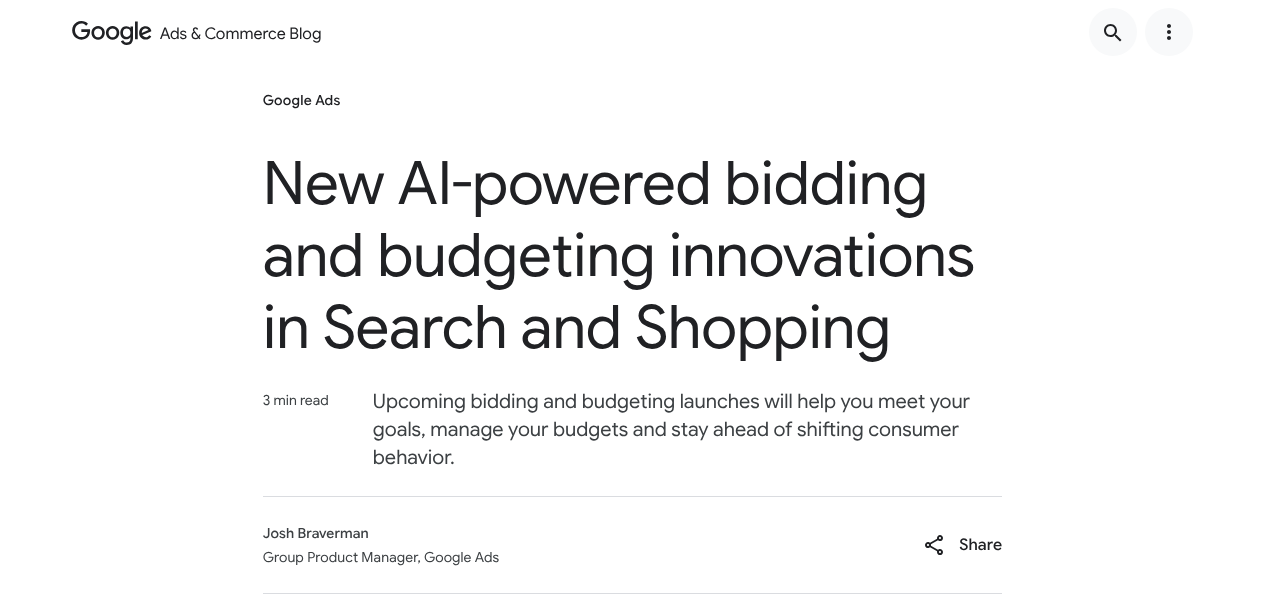
What it is: Search campaigns on Target CPA can learn from your whole lead-to-sale journey, including goals you don't bid on, like phone calls and later sales stages.
Use it when: a form fill is not the finish line.
Skip it when: you don't track anything past the form. Fix that first. Google's Data Manager is where post-lead events, like "sales qualified" or "closed," come back into Google Ads.
B2B: This is the one I'm most excited about. Most B2B accounts optimize to "lead," then wonder why sales calls the leads junk. Feed back the sales-qualified lead and the closed deal, and bidding starts chasing pipeline instead of whitepaper downloads.
B2C: A roofing or HVAC company gets plenty of quote requests and fewer booked jobs. Teach the bidding which is which.
What it is: You give bidding a ROAS tolerance so it can chase less obvious searches it would normally pass on. Google says Search campaigns using it see 27% more unique converting users on average. It started on Search and is extending to Performance Max and Shopping.
Use it when: your ROAS target has you winning the same searches over and over.
Skip it when: cash is tight this quarter or conversion volume is too low to learn from.
B2B: In Google's own lead gen roundup, BBVA paired a 20% ROAS tolerance with AI Max and reported 155% more new high-quality leads at a 3% lower cost per lead. Different industry, same play: loosen the target a little and test adjacent problem searches.
B2C: Open it up in peak season, when new shoppers search in ways your history has never seen.
What it is: One budget for a date range, from a few days to a few weeks, instead of a daily cap. Demand-led pacing, rolling out to Search and Shopping, spends more on busy days and less on slow ones without going over your monthly and daily limits. Google says total budgets cut manual budget changes by 66% on average.
Use it when: your spend has a start date and an end date.
Skip it when: the campaign is always on and demand is steady. A daily budget is fine.
B2B: Trade show week or a three-week webinar push. Set it once.
B2C: A Black Friday weekend sale with no 11 PM budget edits.
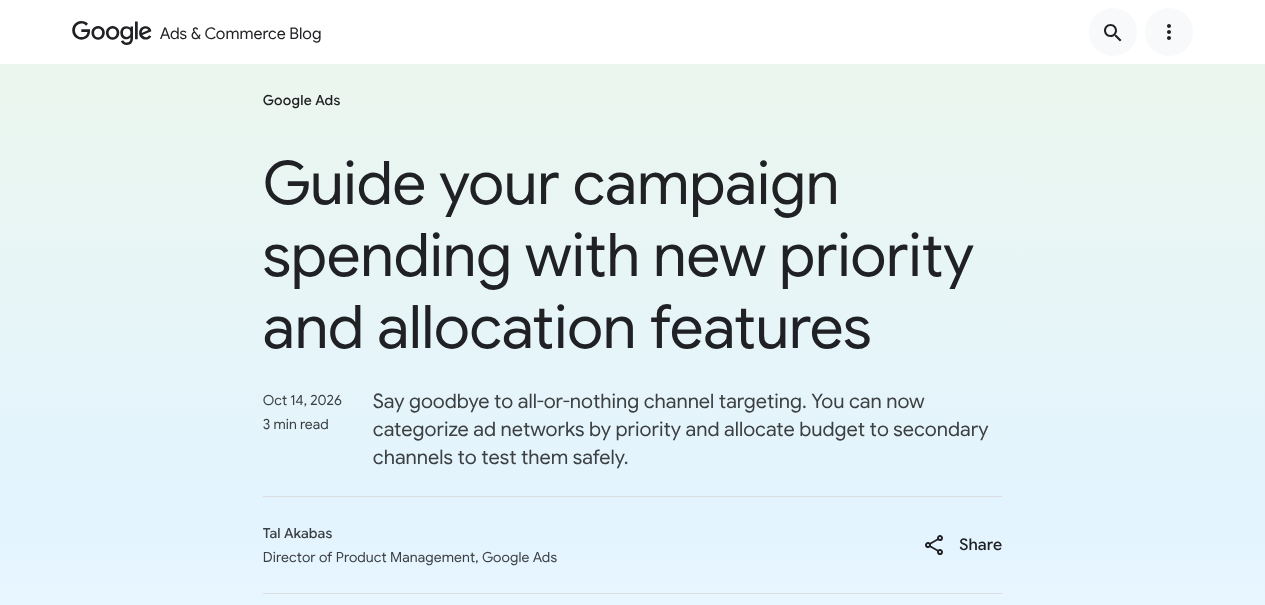
What it is: Announced October 14 and rolling out across Search, Shopping, Performance Max and Demand Gen. You mark channels high or low priority. High gets funded first, and you can cap low-priority channels at a percentage of the daily budget. Google calls that cap best effort, not a hard stop.
One heads-up: starting February 2027, Search campaigns with the Display Network turned on lose their current spend setup. Google's fix to keep things as they are is setting Display to low priority with a 50% allocation.
Use it when: you've been all in or all out on a network.
B2B: Keep Google Search high. Put Search partners on low with a small cap and finally get a real read, instead of leaving it off forever.
B2C: In Performance Max and Demand Gen, Google's own surfaces (Search, YouTube, Maps, Gmail, Discover) move together as "Google channels." Keep them high and give Display a capped trial.
What it is: Not this month's news, but most accounts I look at still aren't using it. Performance Max now has a channel performance report, full search terms reporting, campaign-level negative keywords (up to 10,000 per campaign) and brand exclusions.
Use it when: you've been running PMax on faith.
B2B: Block "jobs," "salary," "free" and "certification" searches. An IT company's PMax will happily spend on people who want to work there.
B2C: Use brand exclusions so PMax stops taking credit for people already searching your name.
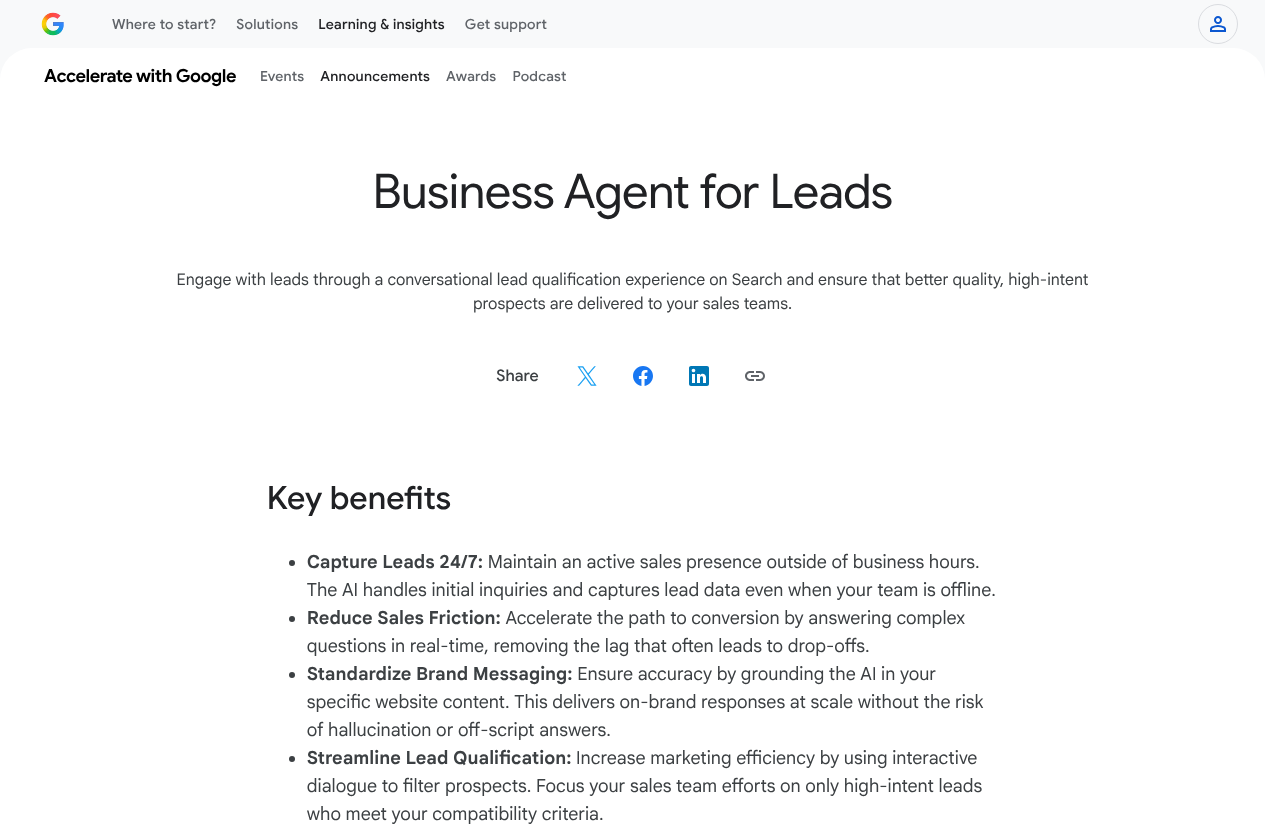
Google announced this in May and said it was coming "in the coming months": a chat inside the Search ad, grounded in your website, that answers questions and qualifies prospects before they reach your inbox. For B2B, think pre-qualifying by company size and need before anyone books a call. Google's B2C example is a student comparing schools. I'll judge it on lead quality, not the demo.
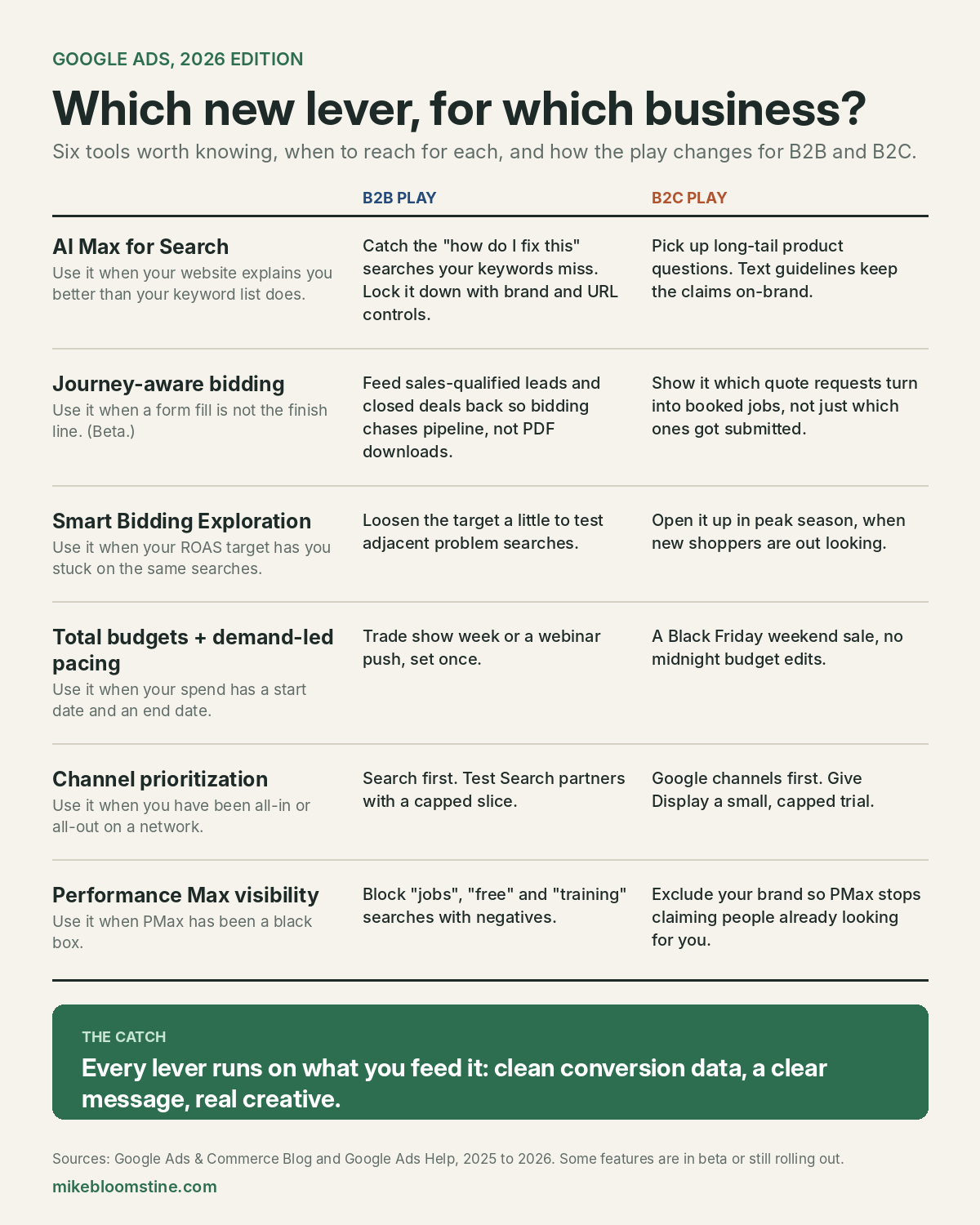
Every tool above takes an input from you. AI Max needs a site worth reading and guidelines worth following. Journey-aware bidding needs sales data somebody keeps clean. Exploration needs a tolerance somebody decided on. Channel priority needs an opinion about where your buyers actually are.
AI drives the execution now, and it's good at it. Strategy, messaging and creative are still a human job. Everyone has access to the same levers this year, so the gap between accounts won't come from the tools. It'll come from who feeds them better.
The levers are back. Somebody still has to know which way to pull.
I help B2B and B2C teams build marketing engines that compound — strategy first, systems underneath.
